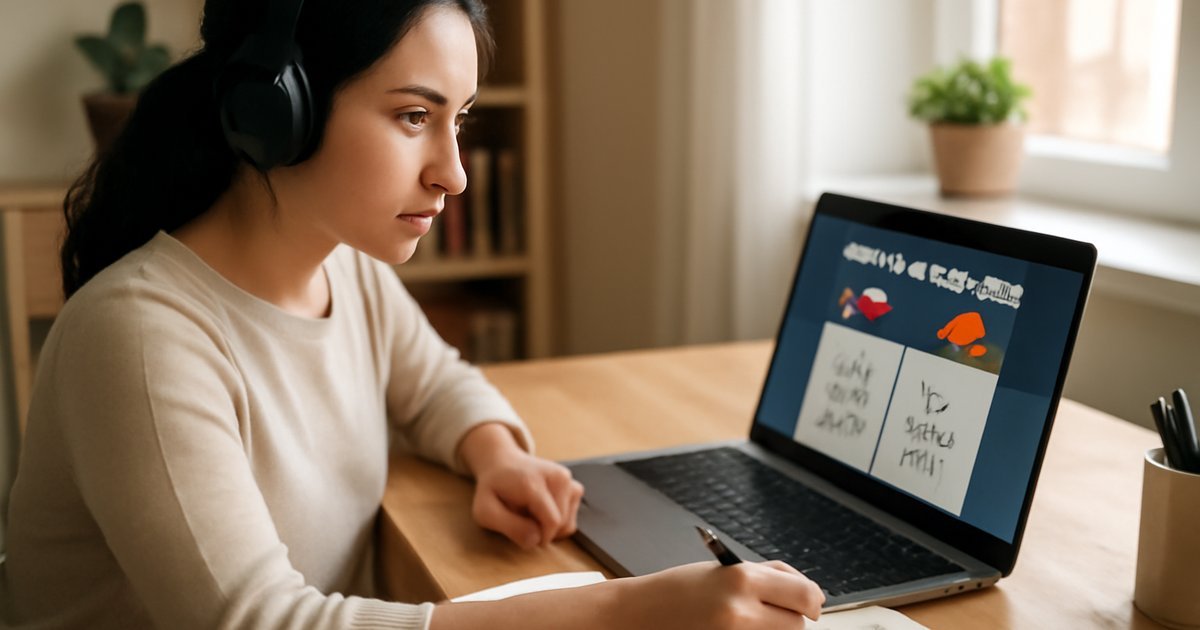
Learning a second language used to mean expensive tutors, bulky textbooks, and rigid classroom schedules — but for today’s students, the entire experience fits in your pocket.
When 22-year-old college junior Priya signed up for a Spanish minor, she assumed she’d spend most of her budget on textbooks and tutoring sessions. Instead, she relied almost entirely on a combination of free and low-cost language learning apps — and finished her first semester with a B+ in her oral proficiency exam. Her experience isn’t unusual anymore.
According to the Modern Language Association, enrollment in language courses at US colleges saw a significant rebound after years of decline, driven in large part by students using digital tools to supplement classroom instruction. In 2026, language learning technology has never been more accessible, more personalized, or more effective — but not every app delivers the same results for every learner.
In this guide, you’ll discover the best language learning apps and EdTech tools available right now, understand what makes each one worth your time, and learn how to build a learning routine that actually sticks — whether you’re a beginner or an intermediate learner looking to level up.
Why Language Learning Tools Matter More Than Ever in 2026
The global job market has made multilingualism a genuine competitive advantage — not just a resume talking point. According to the Bureau of Labor Statistics, careers in translation and interpretation are projected to grow significantly faster than average occupations, but the value of language skills extends far beyond dedicated linguistics roles.
Employers in fields like international business, healthcare, government, and technology increasingly prefer candidates who can communicate across language barriers. A 2024 report from the American Council on the Teaching of Foreign Languages (ACTFL) found that bilingual employees earn between 5% and 20% more than their monolingual counterparts in comparable positions.
Beyond career outcomes, research from the Harvard Graduate School of Education has linked second-language acquisition to stronger cognitive flexibility, improved memory, and greater empathy — skills that serve students across every discipline.
The timing matters, too. EdTech platforms in 2026 now use AI-powered speech recognition, spaced repetition algorithms, and adaptive lesson paths that adjust in real time to your progress. That means the tools available to you today are meaningfully better than what existed even three years ago.
If you’re exploring other digital tools to support your academic growth, the Best Productivity Apps for Students in 2026 is a great companion resource to help you build a complete EdTech toolkit.
What Makes a Language Learning App Actually Effective?
Before diving into specific platforms, it’s worth understanding what the research says about how people successfully acquire a new language — because not all apps are built the same way.
Linguists and cognitive scientists generally agree on a few core principles: learners need consistent exposure, meaningful repetition, opportunities for real communication, and low-stakes practice environments. The problem with many apps is that they optimize for engagement (streaks, points, badges) rather than actual acquisition.
A common misconception is that using a language app for 10 minutes a day is enough on its own to reach conversational fluency. According to the Foreign Service Institute (FSI), which trains US diplomats, languages like Spanish and French require roughly 600-750 classroom hours for English speakers to reach professional proficiency. Apps accelerate that process when used consistently — but they work best as part of a broader learning strategy, not as a standalone solution.
What separates the best tools from the rest comes down to four factors:
- Spaced repetition: Reviewing vocabulary at scientifically timed intervals to move words into long-term memory
- Output practice: Actually speaking or writing, not just recognizing answers
- Contextual learning: Learning words in sentences and real situations, not isolated lists
- Adaptive difficulty: Content that adjusts to your current level automatically
Keep these criteria in mind as you evaluate the tools below.
The Best Language Learning Apps and Tools for Students Right Now
Here’s an honest breakdown of the top platforms available in 2026, covering what each one does well, where it falls short, and who it’s best suited for.
1. Duolingo (Free / Duolingo Super: ~$7/month)
Duolingo remains the most widely used language learning app in the world, and for good reason. Its gamified interface makes daily practice feel low-effort, and its course library now covers over 40 languages with noticeably improved AI-driven conversation features.
Best for: Absolute beginners building vocabulary and basic grammar habits.
Honest trade-off: The free version relies heavily on repetition drills and may not push intermediate learners hard enough. The conversation practice features, while improved, still feel scripted compared to real conversation.
2. Babbel (Subscription: ~$10-14/month)
Babbel takes a more structured, curriculum-based approach than Duolingo, with lessons designed by professional linguists. It focuses heavily on practical conversation scenarios — the kind of language you’d actually use traveling, working, or socializing.
Best for: Adult learners and college students who want real-world conversational skills quickly.
Honest trade-off: No free tier beyond a trial, and its language selection is smaller (15 languages) compared to Duolingo.
3. Anki (Free / Desktop and iOS App)
Anki is a flashcard system built on a powerful spaced repetition algorithm. It’s less flashy than commercial apps, but language learners who use it consistently report strong vocabulary retention. You can download community-made decks for hundreds of languages or build your own.
Best for: Serious learners who want granular control over their vocabulary practice and are comfortable with a less polished interface.
Honest trade-off: There’s a learning curve to setting it up effectively, and it doesn’t include grammar explanations or speaking practice.
4. Pimsleur (Subscription: ~$20/month)
Pimsleur is one of the oldest names in language education, and its audio-first approach remains uniquely effective for building spoken fluency. Lessons are 30-minute audio programs designed to be used while commuting, exercising, or doing chores.
Best for: Auditory learners and busy students who want to study hands-free.
Honest trade-off: It’s pricier than most apps, and it doesn’t develop reading or writing skills significantly.
5. italki (Pay-per-lesson: ~$10-30/hour)
italki connects learners with native-speaking tutors and community language partners for one-on-one sessions. Nothing replaces actual conversation practice with a real person, and italki makes that accessible at a range of price points.
Best for: Intermediate to advanced learners who need real speaking and listening practice.
Honest trade-off: Requires scheduling and budget. Community tutors are cheaper but vary in teaching quality.
6. Clozemaster (Free / Pro: ~$8/month)
Clozemaster fills a gap that most popular apps ignore: intermediate learners who have basic vocabulary but need to build fluency in context. It uses a fill-in-the-blank sentence format with thousands of sentences pulled from real-world sources.
Best for: Students past the beginner stage who feel stuck and want rapid vocabulary expansion.
Honest trade-off: Minimal explanation; works best when paired with a grammar-focused resource.
7. Language Transfer (Completely Free)
Language Transfer offers free audio courses for several languages, including Spanish, French, German, Arabic, and others, built on a Socratic dialogue method that teaches you to construct the language rather than memorize it. Widely praised by serious learners for its depth and effectiveness relative to its zero cost.
Best for: Budget-conscious learners who want genuine linguistic understanding, not just phrase memorization.
Honest trade-off: Limited language selection and no app interface — just audio files.
Common Mistakes to Avoid When Using Language Learning Apps
Even the best tools can deliver poor results if you use them the wrong way. Here are the most frequent mistakes students make — and how to correct them.
Mistake 1: Chasing streaks instead of comprehension.
Gamification features like daily streaks are designed to build habits, but many students complete lessons on autopilot just to maintain their streak without actually absorbing the material. Fix this by turning off streak notifications and focusing on reviewing material you genuinely struggled with.
Mistake 2: Using only one app and expecting fluency.
No single app covers all the skills you need — listening, speaking, reading, and writing all require different practice methods. Build a layered routine: use one app for vocabulary and grammar, one for speaking practice, and consume native content (podcasts, YouTube, shows) for passive listening exposure.
Mistake 3: Skipping grammar entirely in favor of "immersion only."
The idea that you can learn purely through exposure — as young children do — is largely a myth for adult learners. Research from cognitive scientists like Stephen Krashen suggests that adults benefit significantly from explicit grammar instruction alongside natural input. Don’t skip grammar; just don’t let it dominate your practice time.
Mistake 4: Avoiding speaking until you feel "ready."
Most students delay speaking practice because they fear making mistakes. But according to research on language acquisition, output — actually producing the language — is critical to cementing what you’ve learned. Start speaking from day one, even imperfectly. italki and language exchange partners are ideal for low-stakes practice.
How to Build a Language Learning Routine That Sticks
Knowing which tools to use is only half the equation. How you structure your practice time determines how quickly you progress.
Step 1: Set a specific, realistic goal.
Vague goals like "learn Spanish" lead to inconsistent effort. Instead, define a measurable target: "Hold a 5-minute conversation about my daily routine by March" or "Pass the DELF A2 exam within 6 months." Specific goals help you choose the right tools and measure progress.
Step 2: Commit to a minimum daily practice block.
Research on habit formation, including studies cited by the American Psychological Association, suggests that consistency matters more than duration. Twenty focused minutes every day outperforms two-hour weekend cramming sessions. Block time on your calendar before other commitments take over.
Step 3: Use a combination of app-based practice and real input.
A practical daily structure might look like: 15 minutes of Anki vocabulary review, 15 minutes of Babbel or Duolingo grammar practice, and 20-30 minutes of passive exposure — a podcast in your target language, a YouTube video, or an episode of a TV show with subtitles.
Step 4: Schedule speaking sessions weekly.
Even once a week on italki or with a language exchange partner makes a significant difference. Speaking practice forces your brain to retrieve language actively rather than passively recognize it — a process researchers call "retrieval practice," which dramatically improves retention.
Step 5: Track your progress with concrete benchmarks.
Use a language proficiency framework like the Common European Framework of Reference for Languages (CEFR) to understand where you are and where you’re heading. Many apps now map their content to CEFR levels, making it easier to see your trajectory.
For students who want to connect language skills to broader academic and career goals, check out Best Microlearning Platforms for Students in 2026 — many of those platforms include language modules alongside other professional development courses.
Frequently Asked Questions About Language Learning Apps
Can I really become fluent using only free apps?
Free apps like Duolingo, Anki, and Language Transfer can take you surprisingly far — especially to an intermediate level — but reaching true fluency typically requires real conversation practice and exposure to native content. Combining free apps with a free language exchange partner (through platforms like Tandem or HelloTalk) gets you much closer without spending money.
How long does it take to see real progress with language apps?
Most consistent users report noticeable vocabulary growth and basic comprehension improvements within 4-8 weeks of daily practice. However, conversational confidence usually takes longer — often 6 to 12 months of sustained effort for commonly studied languages like Spanish or French. Progress varies significantly by language complexity and your prior language learning experience.
Are language learning apps effective for academic credit or official certification?
Apps alone won’t earn you academic credit, but they can help you prepare for official proficiency tests like the DELE (Spanish), DELF (French), HSK (Mandarin), or JLPT (Japanese). Many universities also accept proficiency test scores as placement criteria or elective credit. Check with your academic advisor for your institution’s specific policies.
Which app is best for complete beginners with zero background in a language?
For absolute beginners, Duolingo or Babbel offer the most structured entry points with clear progression. Language Transfer is also highly recommended for beginners in its supported languages because it explains the logic of the language rather than just drilling phrases. Starting with two tools — one for structure and one for vocabulary — gives you a stronger foundation than relying on a single platform.
Can language learning apps help with college language course requirements?
Yes — many students use apps to reinforce what they’re learning in class, prepare for exams, and build vocabulary outside of class hours. Apps are particularly useful for spaced repetition of vocabulary lists and listening practice. That said, they’re a supplement to formal instruction, not a replacement. Your professor and classroom environment remain your primary resources for grammar, feedback, and academic language use.
Conclusion
Learning a new language in 2026 is more achievable than at any other point in history — not because it’s become easier, but because the tools available to you are genuinely excellent. Whether you’re learning Spanish for a study abroad program, Mandarin for career purposes, or French just because you love the language, there’s a combination of apps and EdTech tools that can match your goals, schedule, and budget.
The most important thing you can do today isn’t to find the "perfect" app — it’s to start. Pick one tool from this list, commit to 15 minutes tomorrow morning, and build from there. Languages are learned in consistent daily increments, not in occasional bursts of inspiration.
Your next step: choose one language and one platform from this guide, set a 60-day goal, and schedule your first practice session before you close this tab. The path to fluency begins with that first small, imperfect step.
The information in this article is for educational and informational purposes only. Academic requirements, program availability, and career outcomes vary by institution and individual circumstances. Always consult with a qualified academic advisor or career counselor for personalized guidance.
Content reviewed by our Editorial Team — writers and educators committed to delivering accurate, practical, and inspiring content for learners of all ages.